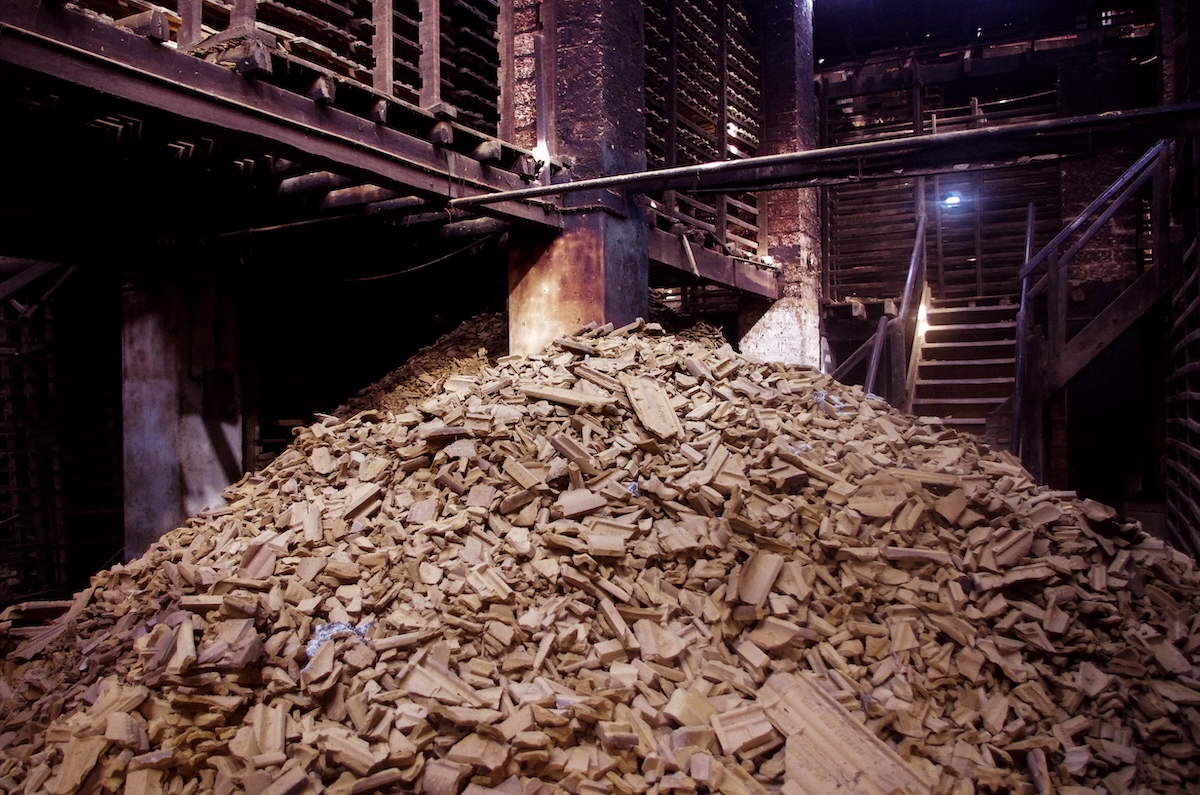
Materials make architecture, but there is frequently a disjuncture between the production of materials and the construction of architecture. This project investigates this separation through a specific building material: the Mangalore tile.
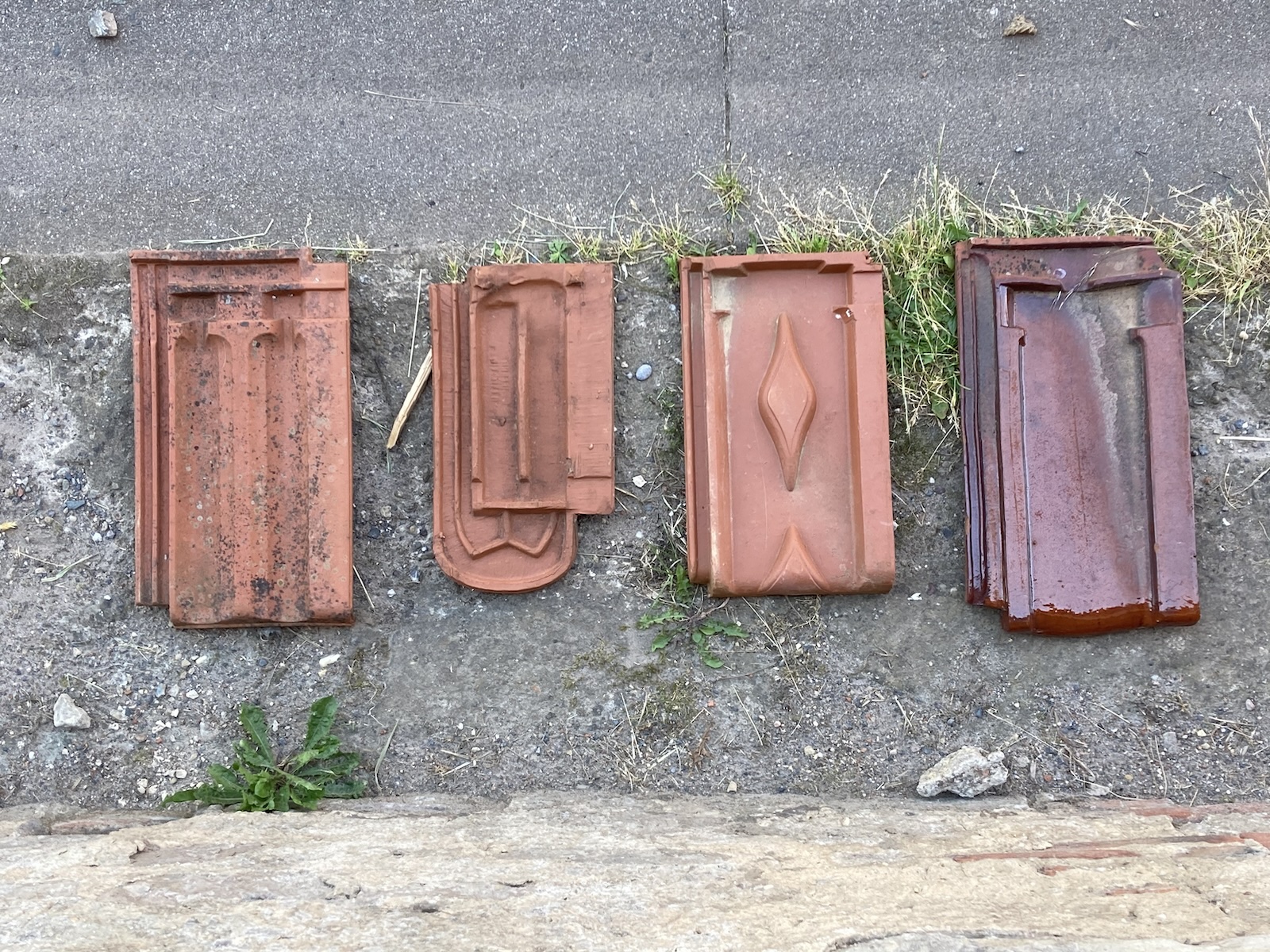
On 26 July 1862, Basel Missionary engineer George Plebst requested permission to fabricate an iron mould in Europe. He intended to carry the mould to the mission field to begin production of interlocking clay roof tiles in South India. The product of this endeavour, the Basel Mission tile, embodied a material imagination and an approach to the role of work within an evangelical ideal. Proliferation of the tile arguably superseded the reach of the evangelism that created it, and contributed to the later development of the Mangalore tile, a product used widely in roofing throughout India and the Indian Ocean.
In 2015 the Mangalore tile factories were encountered in various states of demolition, disuse and disrepair. Using historical records, site observations, personal collections and a background of practical engagement with tile factories, Itineraries of Residue questions what lies beneath and beyond this contrast. Investigating the leftover material, structures, apparatus and consciousness of and through the Mangalore tile, the project discerns difference within the material and the spaces it precipitated, revealing how a product of South Indian resources and a ‘civilising mission’ embodies a drainage imagination, a building system and a system of beliefs.
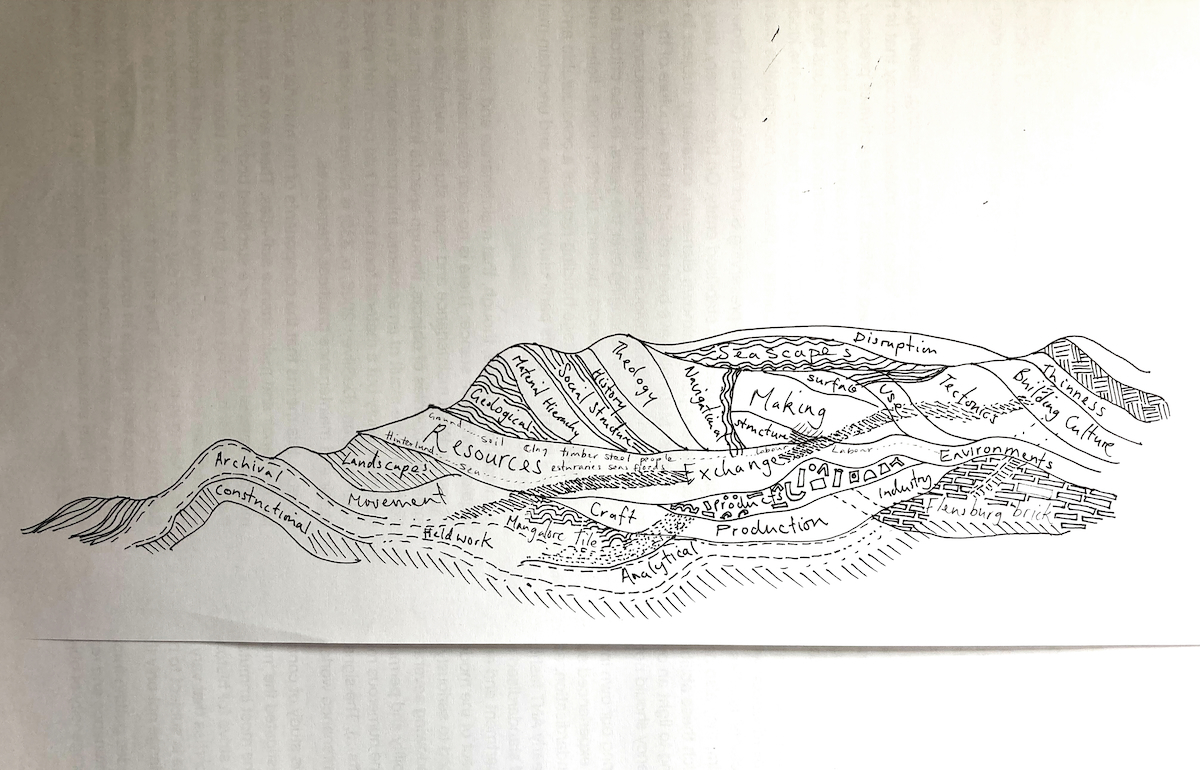
Research shifts the focus away from considering the tile as an isolated unit of construction to the construction of the material itself. In doing so the research questions, How does residue of multi-scalar movements contribute knowledge on construction of, with and through the Mangalore tile? What potential does this carry for cycles of building culture?
Journeying across France, Germany and Switzerland to South India and the Indian Ocean, the project reveals that the Mangalore tile was not one but one of many tiles, each speaking of commonality in production and multiplicity in material, place and identity.
Distinguishing between remnant and residue, the thesis applies conceptions of the remainder from the Vedas, Jacques Derrida’s essay Reste (2002) and Charles Malamoud’s book Cooking the World (1989) to interpret tangible and intangible residue through the tile within cyclical processes, identifying the ‘Cascades of Remainders’ (Malamoud 1989; Derrida 2002; DeArmitt 2016) as a way in which residue holds potential as the foundational force for cycles of creative actions, constructing environments and producing knowledge.
Four interwoven threads operate dynamically between material and meaning, contributing spatially to reading difference, theoretically to defining residue, methodologically to using movement in knowledge-making, and practically to applications in transformation.
Supervisors
- Thomas Bo Jensen, Head of Research, Aarhus School of Architecture
- Carolina Dayer, associate professor, Aarhus School of Architecture
KONTAKT
Relateret
MÅSKE ER DU OGSÅ INTERESSERET I DETTE
RELATERET INDHOLD
The page you have selected is currently not available in English.