
Textile Pavilion, Scaling the Temporal
By wrapping a light timber skeleton in flexible linen panels, the Textile Pavilion opens a dialogue with the legacy of modernism, inviting alternative, softer material futures.
Instead of heavy, resource-intensive and static walls, coarsely woven textile panels form a climatic skin within the space, fundamentally altering how light and heat move through naterials. Its material-based sustainability lies in the logic of the thread: weaving is a process where material is utilized to its absolute maximum, and where structure and binding create collective strength.
By understanding the material’s inherent behavior and elasticity down to each threat enables the creation of durable objects. The skin follows the logic of traditional kayak building, a craft defined by radical lightness and material restraint. Measuring 3m wide, 5m high and 12m long, the Textile Pavilion is enveloped in 30 taut linen panels, bound together with robust linen cords and reef knots, rejecting rigid connections. Instead of fighting the natural elements, the framework breathes and responds dynamically to sun, wind and water.
Gottfried Semper’s Stoffwechsel described how soft textiles were historically transformed into hard, monumental stone. This project reverses that process, bringing architecture back towards lightweight cloth. The stretched canvas is coated in slaked chalk and cold-pressed linseed oil infused with dark iron oxide pigment, forming a surface that hardens through exposure to the sun.
Rather than isolating itself from its surroundings, the pavilion participates in a continuous metabolic exchange with its environment. By moving away from permanent materials, it enables a short, circular lifecycle: a temporary manifestation of matter whose biogenic components can return to the natural ecosystem without waste.
- Architecture by Heidi Merrild.
- Linen panels developed in collaboration with kayak builder Svend Ulstrup.
- Milling and construction in collaboration with Ambiente and students from Aarhus School of Architecture, using discarded Douglas for timber
- Sponsored by Dinesen. Surface treatment by Linolie.dk.
- Supported by the Danish Arts Foundation and the Dreyer Foundation.
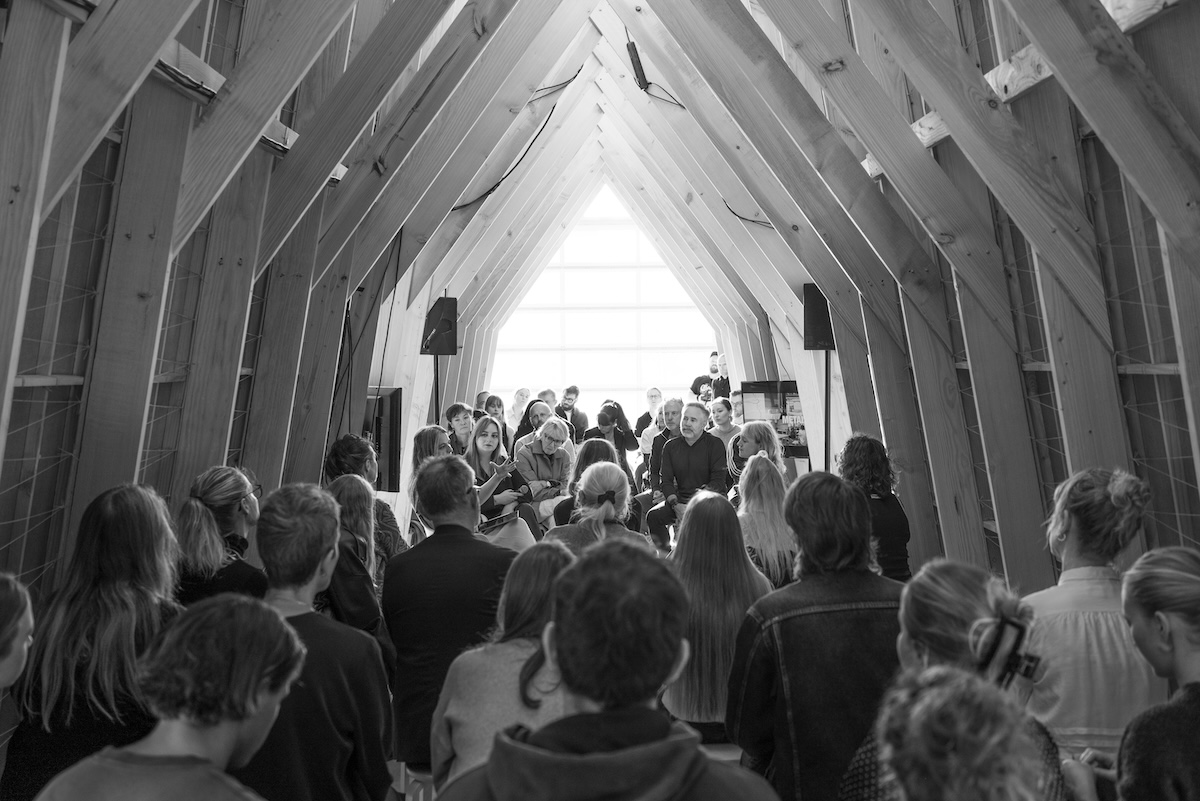 Textile Pavilion.
 Kim Grønborg Hansen // Solist er Ibs Kartoffel
 Rediscovering Openness by SLETH Architects