Making Landscape: What can a landscape laboratory do in the suburban context?
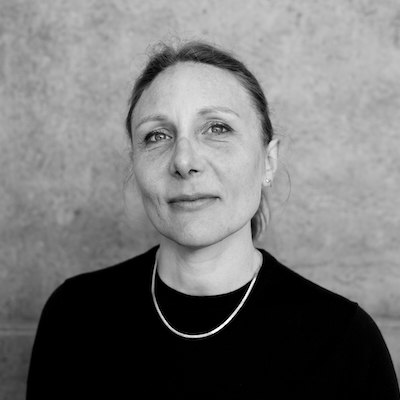
PhD project by Laure Baretaud

PhD project by Laure Baretaud
‘Landscape is the sensitive environment of our relationships with the world, with others, and with ourselves. It is also a moral imperative towards others.
The form, content and richness of our lives depend on it.”
Jean-Marc Besse, La nécessité du paysage, 2018
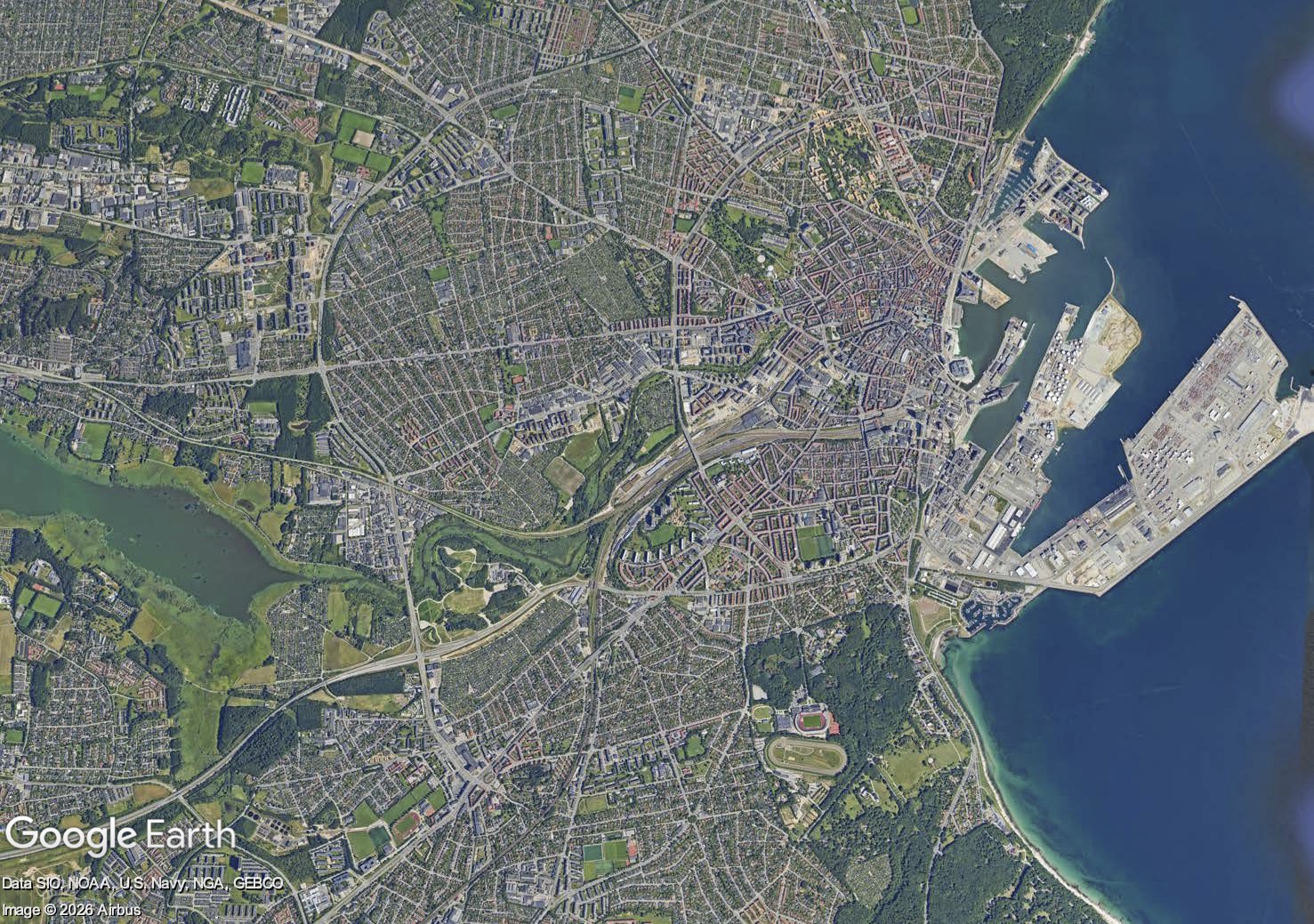
This research explores the role of Eskelunden, a landscape laboratory in the suburban context of Aarhus, Denmark, investigating how landscape architecture might contribute to a more interconnected way of understanding, valuing and producing landscape. It is situated within broader discussions on how humans activities are undermining Earth’s habitability, for Humans and other living beings alike, highlighting the urgent need to rethink our relation to earth and the way we transform it.
Initial phases of the study analyze the dynamics shaping the wider territorial context of Aarhus river valley. On the one hand, the widespread suburban environment is developing through processes of fragmentation, privatization, car-driven infrastructure, and overall loss of spatial quality contributing to ecological degradation. On the other hand, influenced by EU environmental policies, solution-driven approaches aim to counteract this degradation, through a lens of ecological performance.
In Denmark, the Green tripartite agreement strives to reduce greenhouse gaz emission by 70 % by 2030, ensure more nature, cleaner water and a sustainable transformation of agriculture.(Grønt Danmark, n.d.). InAarhus, these measures are implemented through the creation of Water-Nature Park and areas of untouched nature, revealing a functional approach.
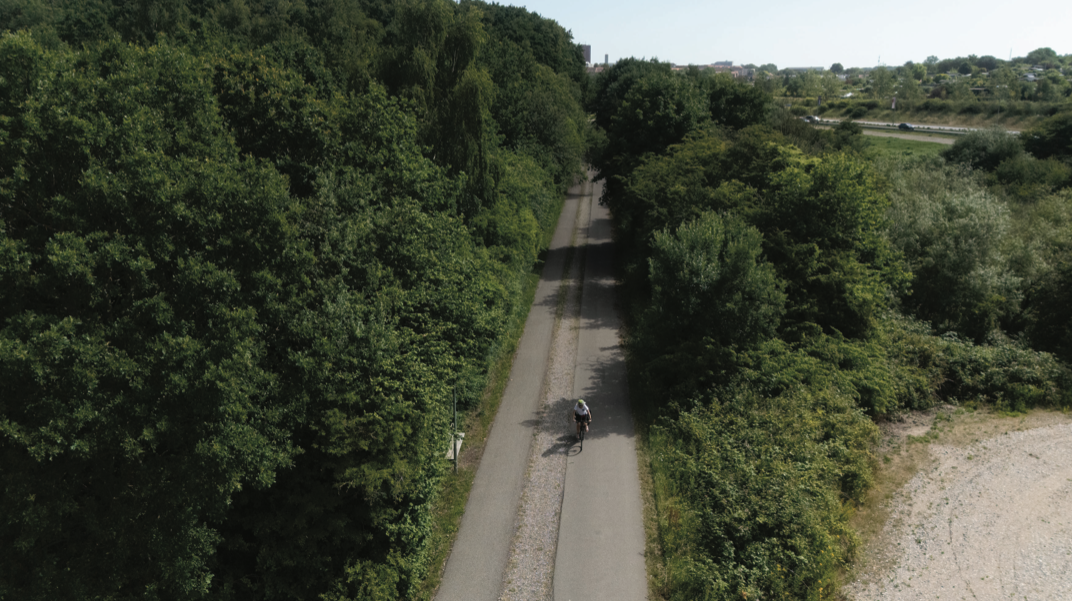
Within these initiatives, the study observes that landscape is often considered the green counterpart of urbanization, tasked with mitigating its impact, without necessarily questioning the underlying dynamics at work. Territorial transformation takes place through fragmented visions while landscape architecture remains largely absent from the processes that shape it.
Despite the growing recognition that we need to embrace interconnectedness of all things, address ecological challenges, and move beyond dualistic approaches, we are still facing a global paralysis and an incapacity to change the way we relate and shape our environment.
The research builds on the proposition that this form of disconnection stems from a lack of sensitivity. It draws on psychiatrist James Hillman idea, which establishes a link between ecological crisis and aesthetic crisis. Ecological degradation is connected to a weakening of our relationship with the world around us: our capacity to perceive, to feel, to pay attention, and ultimately, to care. This leads the study to ask: How can we care for landscapes if we lose the capacity to be affected by them? And what kind of landscape are we then collectively producing?
Recognizing that our own habitability on the planet is at stake, recovering this sensitivity and developing a different relationship with the territory and its inhabitants, human and non-human, becomes a priority. With an average annual population increase of 5,000 inhabitants, Aarhus is facing rapid urban expansion, alongside an increasing frequency of extreme climatic events. Addressing these shifts in the way we envision and shape the landscape therefore becomes crucial.
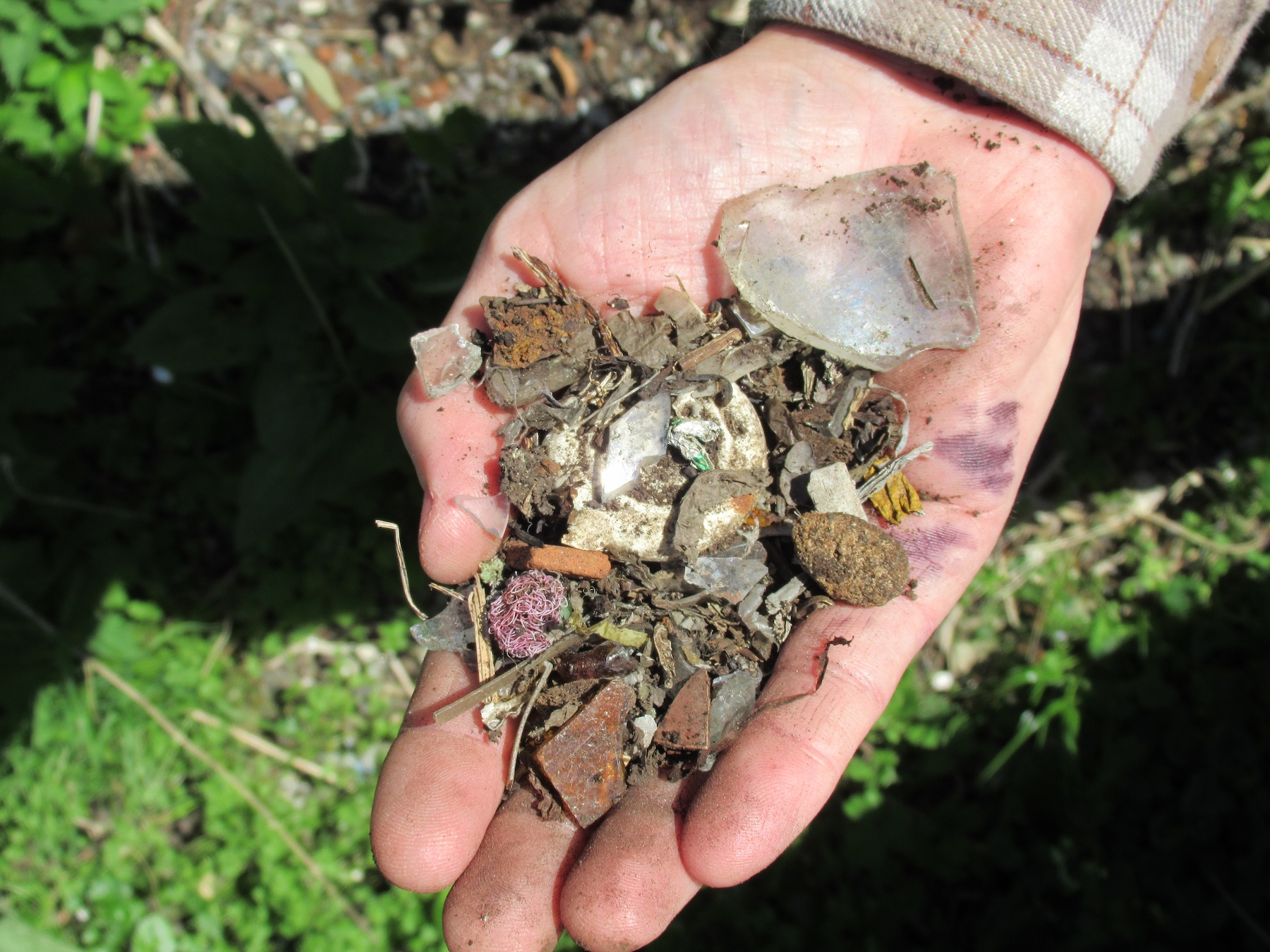
Within this broader context, the research focuses on Eskelunden as a case study and landscape laboratory to investigate these relationships.
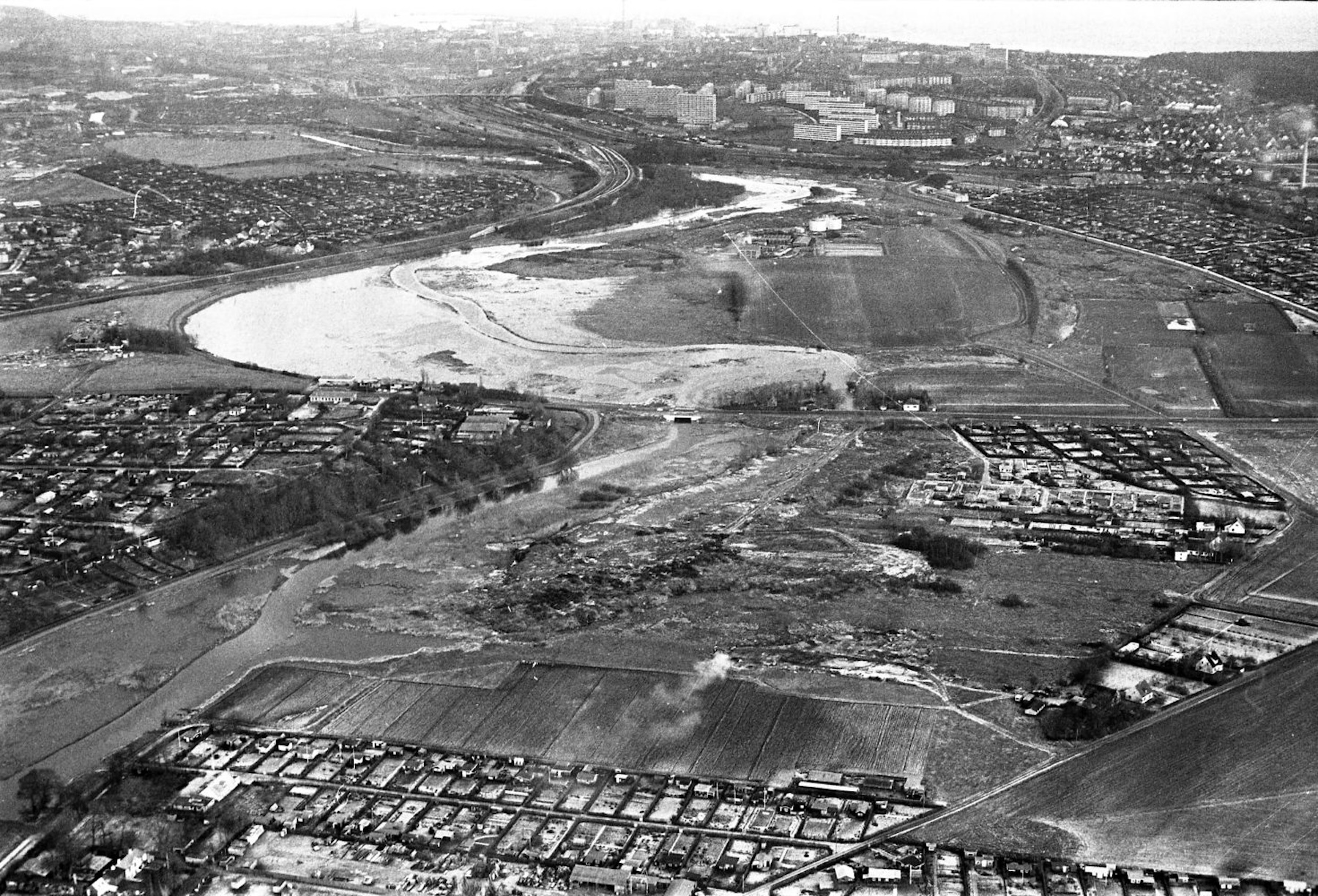
Eskelunden is a 30-hectare site, approximately 3 kilometers from the city center, on the outskirts of Aarhus and at the edge of the largest Water-Nature Park along the river Å.
Selected as part of the Landlabs doctoral program as representative of the Anthropocene, initial analyses suggest that this site brings together the tensions observed at a larger scale.
At the scale of the wider landscape, Eskelunden emerges as a link in the chain of interconnected elements that make up the Å river valley, from its source to its mouth in the city of Aarhus. It acts as a pivot between the dense urban center and its hinterland, opening the city ‘s horizon onto the lakes and the ancient fjord that carved out the iconic landscape.
At a local scale, the site acts as a vantage point, from which to read a layered history of mutations, from a Viking shipyard to a land fill and an event site, the most recent of which are the direct result of ongoing suburbanization. Today, encircled by infrastructure, it has, paradoxically, regained a status akin to insularity. Its condition as a neglected space, a by-product of suburbanization, is as much its defining feature as it is its risk.
The project aims to critically investigate the past and current processes shaping the site.
Early findings highlight the presence on site of multiple actors, both private and public, projecting their own visions and uses. Events, leisure activities, new facilities and other interventions often treat the site and the presence of “Green” as a practical backdrop for human activities.

Beyond the lack of a shared vision, the study explores how actors understand their own agency and individual responsibility in shaping Eskelunden’s landscape. While each individual decision and action transforms an area of the site, the actors do not recognize how these individual transformations accumulate to shape the site as whole – currently contributing to the loss of its spatial and ecological qualities.
In this sense, Eskelunden can be seen as a miniature of the wider dynamics shaping the surrounding landscape. It embodies a broader attitude towards territorial transformation characterized by fragmented decisions, individual ambitions and a lack of spatial quality and shared vision.
The research adopts Research Through Design methodology, informed by theories of interconnectedness and a practice-based experience of landscape architecture.
Combining intuitive lines of work with informed processes, the landscape laboratory serves both as a site of investigation and a framework for exploring potentially transferable alternatives. Rather than approaching Eskelunden as a place to fix, the research investigates its potential to reveal current perception of the landscape while exploring alternative ways of collectively producing it. It considers the different regimes of value held by the different stakeholders, including those of the municipality, local actors such as the event venue and other occupants of the site.
Through design scenarios and experiments, introducing spatial and relational qualities the project will explore how alternative ways of perceiving, representing and projecting the landscape might influence existing practices and engage a shift in the way the site is understood and engaged with.
At its core, the research asks: What can a landscape laboratory do in a suburban context, for whom and in what ways?
How can we ensure that the landscape is recognized as a collective reality of which we are all, to varying degrees and on different scales, the stewards, and for which we share responsibility?
In doing so, the research hopes to contribute to the emerging field of landscape laboratories, while informing approaches to other suburban context.
This research is part of Landlabs doctoral network. This project has received funding from the European Union’s Horizon 2020 research and innovation programme under the Marie Sklodowska Curie Actions ( Grant Agreement No. 101169149)

 https://aarch.dk/wp-content/uploads/2026/10/download-47.jpg
400
400
apparat
https://s3-eu-central-1.amazonaws.com/aarchdk/wp-content/uploads/2019/02/03164631/aarch-logo-dark.svg
apparat2025-08-15 13:22:102026-10-06 15:22:51Laure Baretaud
Relateret
MÅSKE ER DU OGSÅ INTERESSERET I DETTE

 Visualisering: Anne Gottlieb Hansen og Emil Skjelbo Bruun