THE NORDIC ORDER
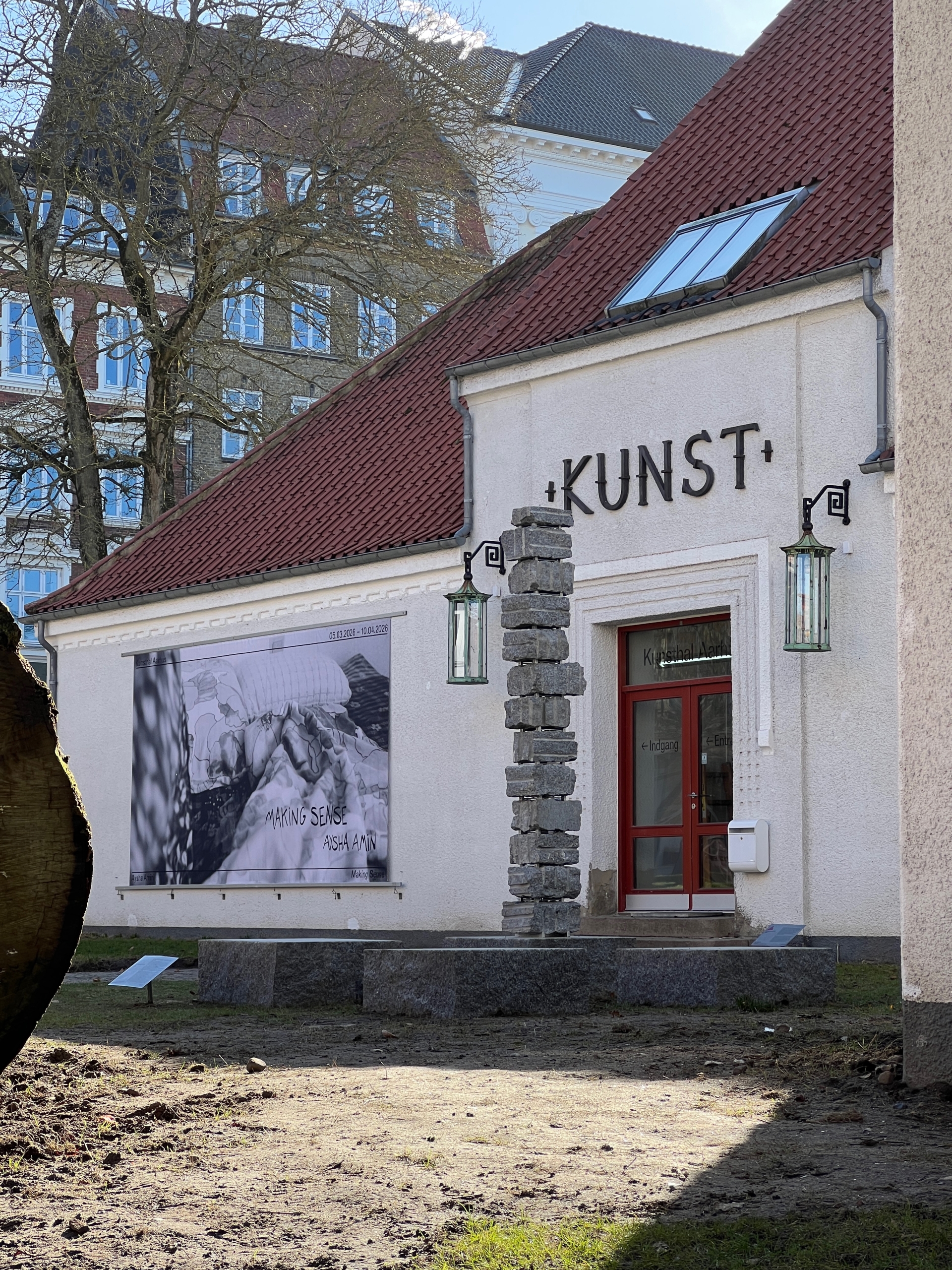
Installation for Works + Words Biennale 2026, March 5th – April 10th at Kunsthal Aarhus

Installation for Works + Words Biennale 2026, March 5th – April 10th at Kunsthal Aarhus
The Ecologies of Stone research group developed the installation entitled, The Nordic Order, for the Words + Works Biennale 2026, held at Aarhus School of Architecture in collaboration with the Royal Danish Academy and Kunsthal Aarhus. Funding support from Boligfunden Kuben. A critical essay on the idea of a ‘Nordic’ Order is published here.
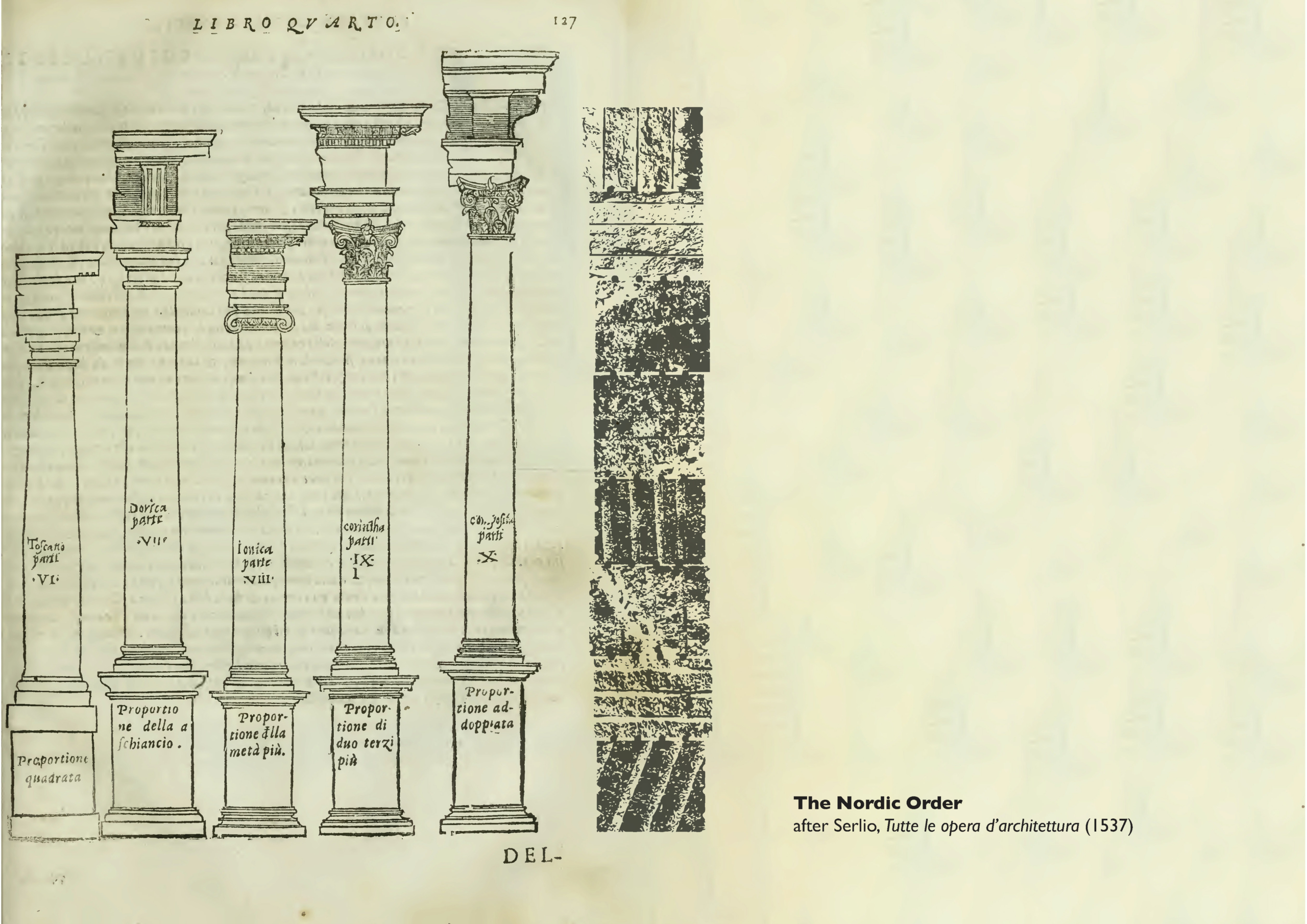
“Diversity of invention sometimes leads the architect to conceive things which he would perhaps never have imagined.” – Sebastiano Serlio, On Architecture (1537)
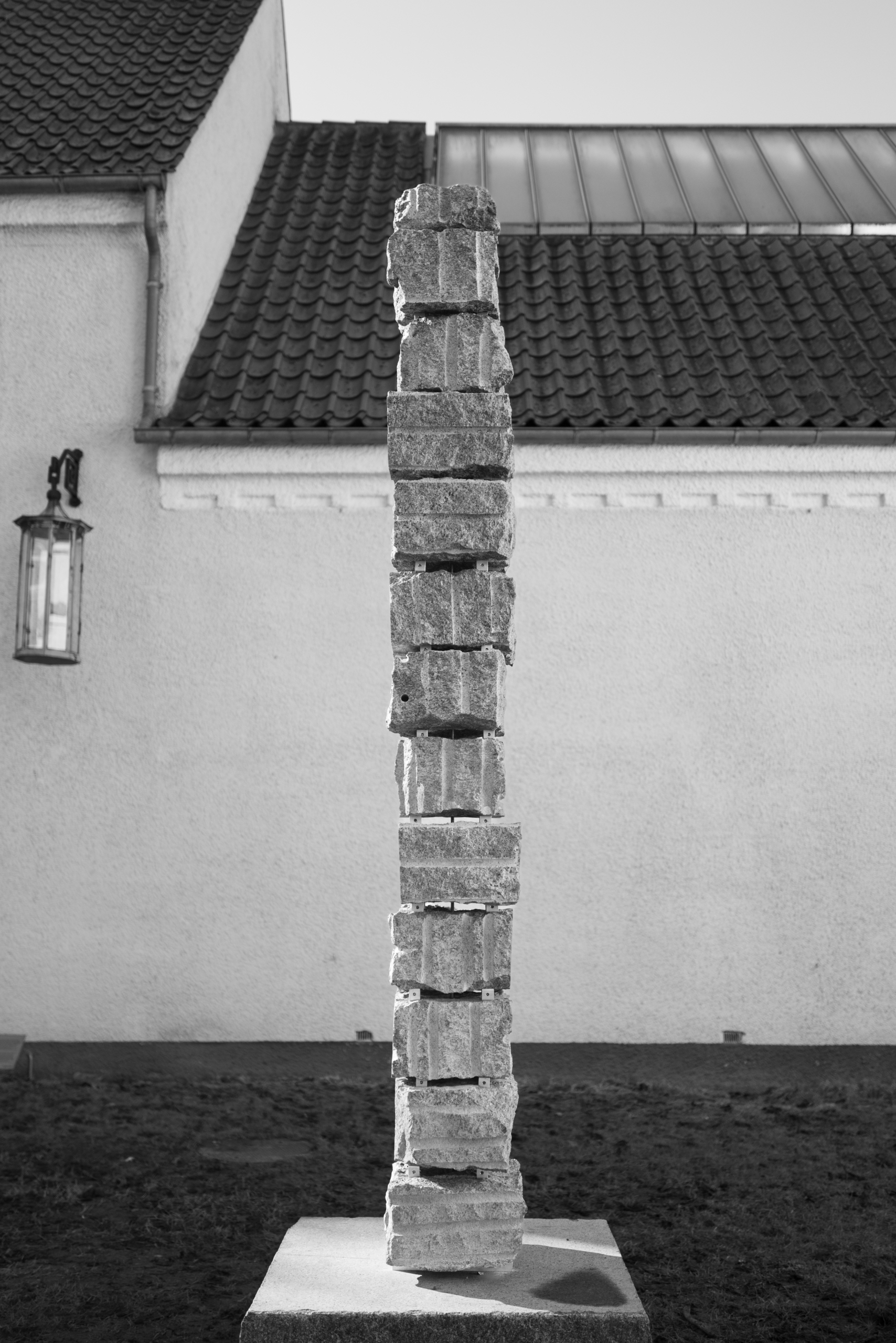
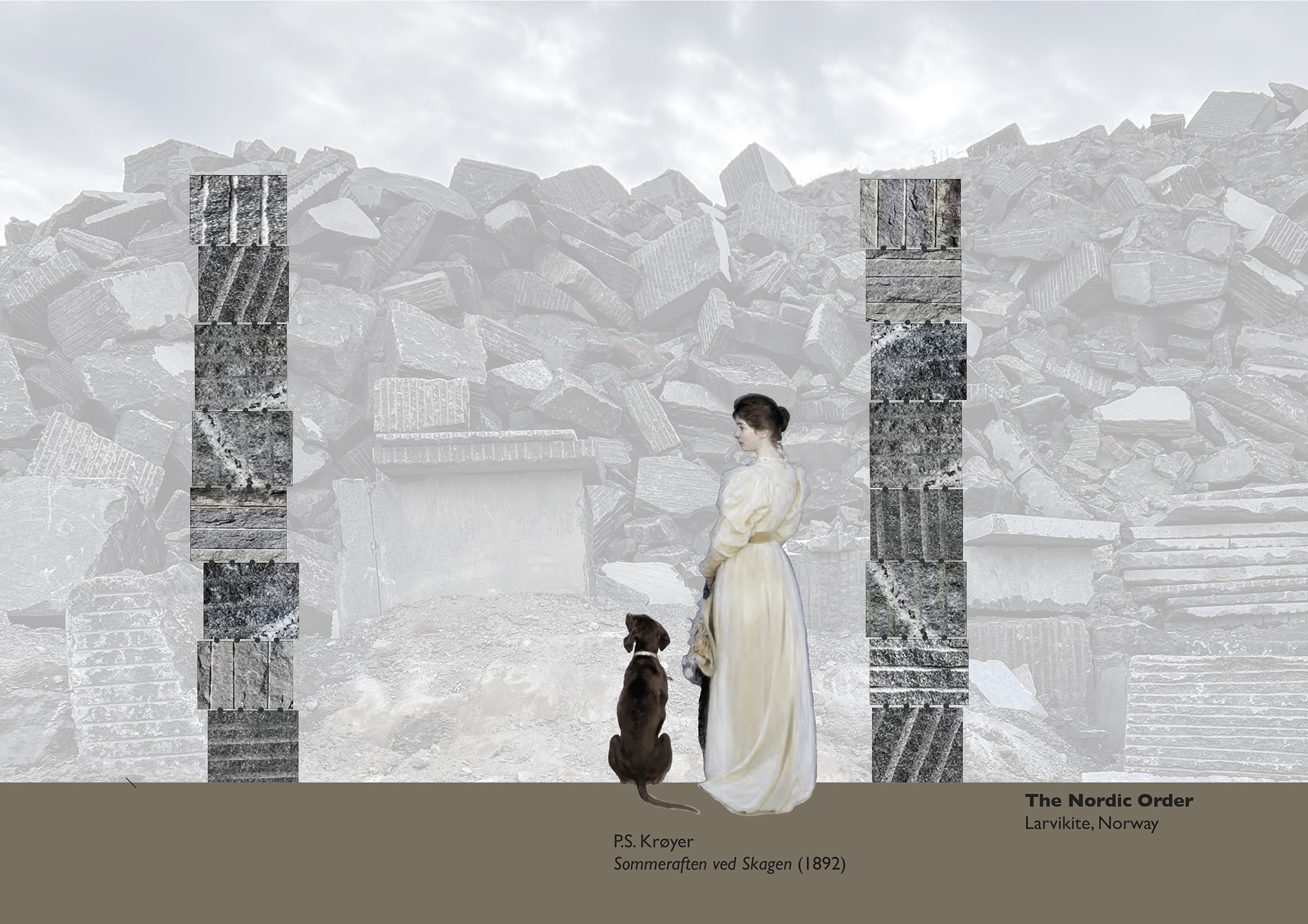
When Sebastiano Serlio codified the five column orders in 1537 (Doric, Ionic, Tuscan, Corinthean, Composite), he could have never imagined our current age, where the architect’s inventive powers are being tested in unprecedented ways. Like the column orders of classical lore, each originating in their own period and place, we propose a new column order for the ecological age: The Nordic Order. In a nod to the Nordic countries’ leading role in environmental reform, the Nordic Order is a formal, material, ornamental, and constructive program for the crisis of ecology.
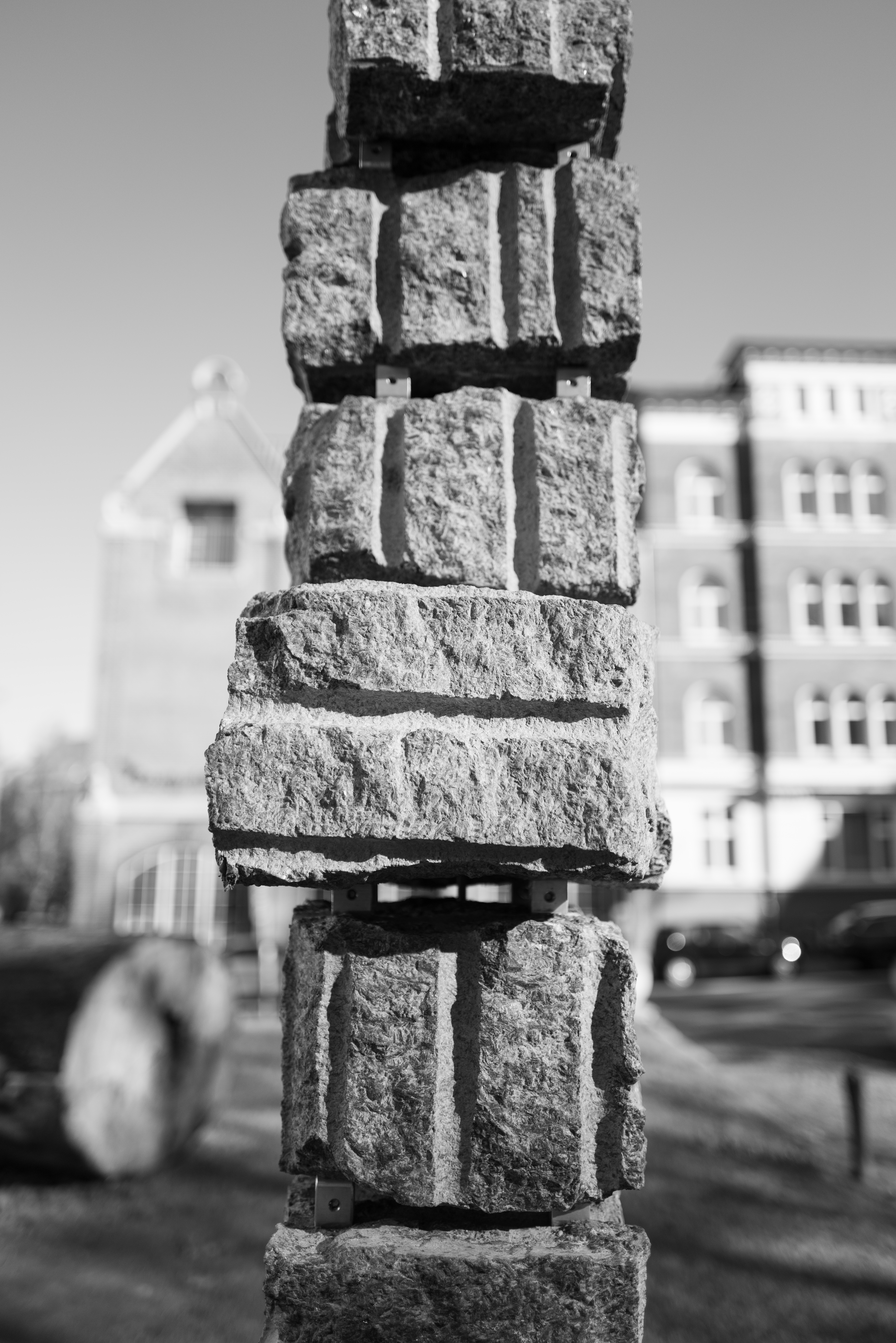
We demonstrate the new order through a 1:1 scale mock-up of a column built in the Nordic Order. Certain principles are inherited from the classical, five-order taxonomy: columns as both representation and structure, the orders as a flexible system of proportional relations and constructive logics, and their agency in space-making. From this, new principles are introduced for the ecological age: natural materials, local materials, the use of waste or left-overs, re-use, reversibility and design-for-disassembly, low-energy processing, durability. Like the classical orders, we imagine that many possible column expressions are possible within the system of principles.
This version of the Nordic Order utilises left-over stone blocks of larvikite from Larvik (NO), supplied by Lundhs AS. assembled with minimum processing in a post-tensioned, structural system. The structural integrity of the column relies on a joining system that takes advantage of the tooling from the quarrying process of hydraulic fracturing. This results in an aesthetic expression that is decidedly rough, brutal, and variegated.
Project credits: Jonathan Foote, Robert B. Trempe, Jr., Thomas Brodersen (Aarhus School of Architecture), Steve Webb (Webb Yates, London), Thomas Løvald (Lundhs AS). Photos by Niels Rysz Olsen and Jonathan Foote.
Related
YOU MAY ALSO BE INTERESTED IN
 https://aarch.dk/wp-content/uploads/2023/06/IMG_3412.jpg
2016
1512
Mads
https://s3-eu-central-1.amazonaws.com/aarchdk/wp-content/uploads/2019/02/03164631/aarch-logo-dark.svg
Mads2023-06-28 13:54:432023-08-09 14:35:27About ecologies of stone
https://aarch.dk/wp-content/uploads/2023/06/IMG_3412.jpg
2016
1512
Mads
https://s3-eu-central-1.amazonaws.com/aarchdk/wp-content/uploads/2019/02/03164631/aarch-logo-dark.svg
Mads2023-06-28 13:54:432023-08-09 14:35:27About ecologies of stone https://aarch.dk/wp-content/uploads/2023/06/IMG_4846x453.jpg
453
400
Mads
https://s3-eu-central-1.amazonaws.com/aarchdk/wp-content/uploads/2019/02/03164631/aarch-logo-dark.svg
Mads2023-06-28 13:52:262023-08-09 14:36:57Research group activities
https://aarch.dk/wp-content/uploads/2023/06/IMG_4846x453.jpg
453
400
Mads
https://s3-eu-central-1.amazonaws.com/aarchdk/wp-content/uploads/2019/02/03164631/aarch-logo-dark.svg
Mads2023-06-28 13:52:262023-08-09 14:36:57Research group activities https://aarch.dk/wp-content/uploads/2023/06/IMG_5313-x453.jpg
453
400
Mads
https://s3-eu-central-1.amazonaws.com/aarchdk/wp-content/uploads/2019/02/03164631/aarch-logo-dark.svg
Mads2023-06-28 13:50:512025-03-12 10:38:33DFF – Exploratory Network
https://aarch.dk/wp-content/uploads/2023/06/IMG_5313-x453.jpg
453
400
Mads
https://s3-eu-central-1.amazonaws.com/aarchdk/wp-content/uploads/2019/02/03164631/aarch-logo-dark.svg
Mads2023-06-28 13:50:512025-03-12 10:38:33DFF – Exploratory Network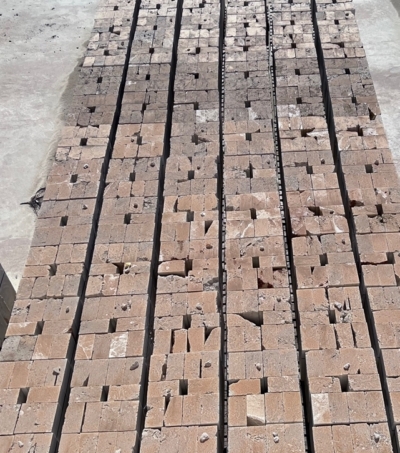 https://aarch.dk/wp-content/uploads/2023/06/IMG_3451.jpg
1183
641
Mads
https://s3-eu-central-1.amazonaws.com/aarchdk/wp-content/uploads/2019/02/03164631/aarch-logo-dark.svg
Mads2023-06-28 12:35:472023-08-09 18:06:03EoS Project cases
https://aarch.dk/wp-content/uploads/2023/06/IMG_3451.jpg
1183
641
Mads
https://s3-eu-central-1.amazonaws.com/aarchdk/wp-content/uploads/2019/02/03164631/aarch-logo-dark.svg
Mads2023-06-28 12:35:472023-08-09 18:06:03EoS Project casesDenne side er ikke tilgængelig på dansk.


 Life Terrains